

Texas Hill Country transmission lines and land values are now inseparable topics, as the state’s first 765kV power lines are routed across some of the region’s most scenic ranch country. Whether you own land in the path of a proposed corridor or you are evaluating a purchase nearby, understanding how these projects work — and what the research actually says about property values — is essential.
The Public Utility Commission of Texas has been approving routes at a pace that has surprised landowners and lawmakers alike. As of September 2026, two major 765kV lines have received final route approval, and a third is under regulatory review. Below, we walk through the projects, the data on property values, your rights as a landowner, and practical steps you can take right now.
What are the 765kV transmission line projects crossing the Hill Country?
Three major 765kV transmission line projects touch or border the Texas Hill Country, each driven by the Permian Basin Reliability Plan that ERCOT developed under House Bill 5066. That 2023 law directed the Public Utility Commission of Texas to order ERCOT to develop a reliability plan for the Permian Basin region to meet surging electricity demand from oil and gas electrification, data centers, and other large loads.
The Howard-Solstice Line is the project most directly affecting the western Hill Country. AEP Texas and CPS Energy are building approximately 370 miles of 765kV line from CPS Energy’s Howard Substation in southwest Bexar County to AEP Texas’ Solstice Substation near Fort Stockton in Pecos County. Counties in the study area include Atascosa, Bandera, Bexar, Crockett, Edwards, Kerr, Kinney, Medina, Pecos, Real, Sutton, Terrell, Uvalde, and Val Verde. The PUCT approved Route 4 – Mod 1 on September 11, 2026, pending certain modifications to reduce landowner impact. The case drew more than 600 parties and more than 260 protests and comments, according to the Hill Country Community Journal tally cited by the Texas Dispatch. The commissioners courts of Kerr, Edwards, Real, and Val Verde counties formally intervened, and Bandera County adopted a resolution opposing the line anywhere in the county.
The Bell County East to Big Hill Line, a joint Oncor and LCRA project, runs roughly 199 miles from Bell County to Schleicher County. Its study area touches Bell, Burnet, Concho, Coryell, Lampasas, Llano, Mason, McCulloch, Menard, San Saba, Schleicher, Tom Green, and Williamson counties — several of which sit along the Hill Country’s northern edge. This project is still under PUC review.
A third corridor, the Dinosaur to Longshore Line, runs through North-Central Texas counties farther from the Hill Country core but is part of the same statewide 765kV expansion. The PUCT approved Route 559 for that project on August 28, 2026.
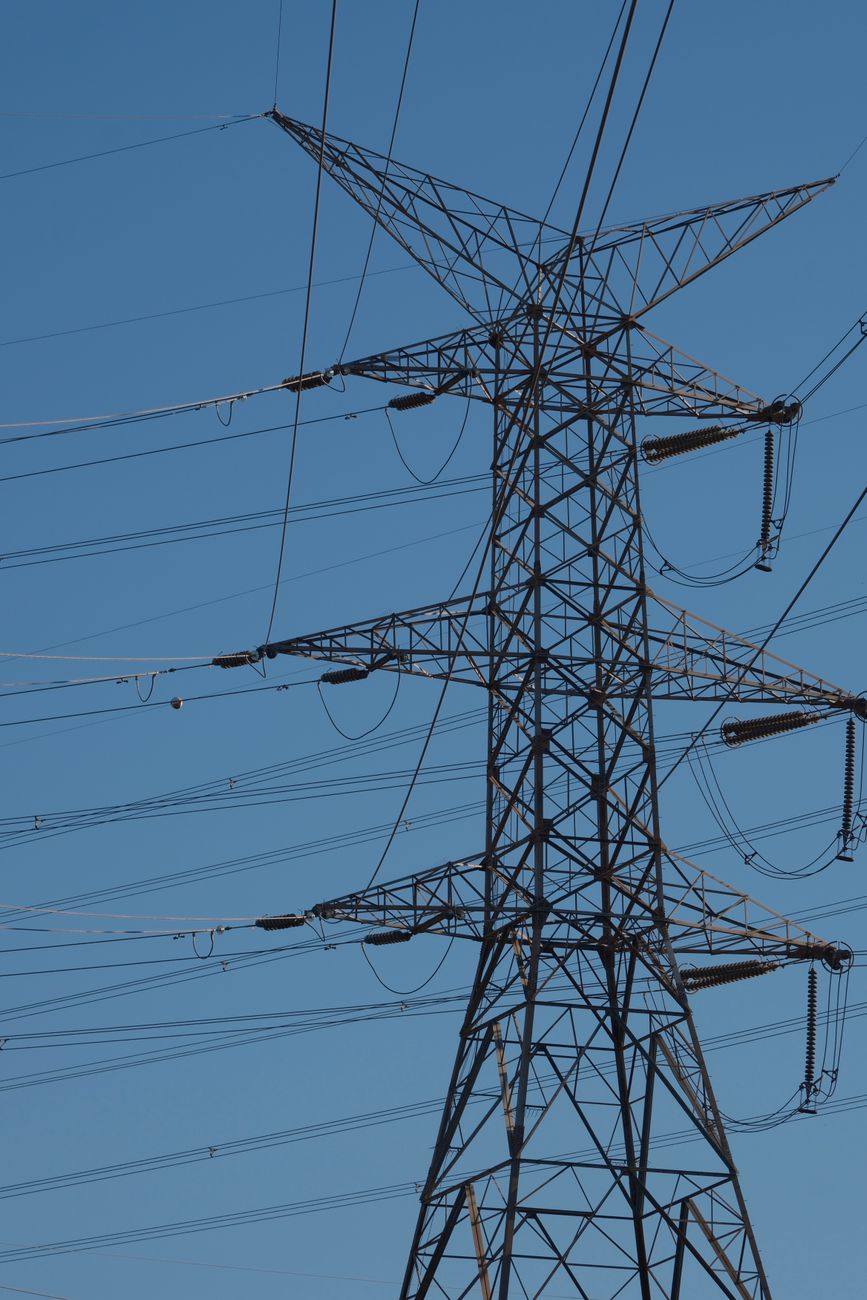
These 765kV lines are the highest voltage ever approved in the ERCOT system. Towers are projected to stand 140 to 160 feet tall and require a 200-foot right-of-way width — far larger than the 345kV lines that have been the Texas standard. For anyone looking to browse ranches in the Austin-Waco-Hill Country region, the routing of these projects is now a factor that cannot be ignored.
How do transmission lines affect property values?
The short answer is that research findings are mixed, and the impact depends heavily on the type of property and its distance from the line.
A significant body of published appraisal research has examined how high-voltage transmission lines affect rural and agricultural property values. A literature review presented to the South Dakota Public Utilities Commission surveyed decades of studies and concluded that the majority of agricultural property owners believed the line had no effect on their property. Recreational property owners were primarily concerned with loss of timber or scenic value, while residential landowners named loss of aesthetic beauty as the predominant effect. Of 23 encumbered properties that sold in one reviewed study, all but one sold at market value.
However, a 2012 study by appraiser James Chalmers examined a rural residential subdivision of 156 lots in Montana near a 500kV line and found a statistical discount of about 15 percent in sale price for lots within 1,000 feet of the line’s centerline. A Headwaters Economics review of the same Chalmers data confirmed that average impact in the Aspen Valley Ranches subdivision in Jefferson County, Montana. Visibility of towers amplified the effect, with properties that had an unobstructed view resulting in greater devaluation.
A peer-reviewed study published in the Journal of Law and Economics offered contrarian evidence: proximity to transmission lines actually yielded positive premiums for nearby farmland parcels — likely because access to electrical infrastructure has economic value for agricultural operations — while confirming a disamenity effect on residential housing prices that was larger for urban houses than rural houses.
The Counselors of Real Estate summarized a 2012 Appraisal Journal article studying rural western land values, noting the author concluded that "property value effects cannot be presumed and are generally infrequent." The takeaway for Texas ranch owners is that the power lines’ effect on land price is not automatic, but it is real in situations where the line is highly visible, bisects usable acreage, or crosses land valued primarily for its scenic character — exactly the qualities that define much of the Hill Country.

What does the research mean for Hill Country ranch land specifically?
The Hill Country is different from a Kansas wheat field or a Montana hay meadow, and that distinction matters. Land in counties like Kerr, Bandera, and Edwards is often purchased for its views, its recreational value, and its proximity to spring-fed rivers and the Edwards Aquifer recharge zone. When the primary driver of value is scenery and solitude, a 160-foot steel-lattice tower inside a 200-foot cleared corridor has a greater marginal impact than it would on flat cropland where the buyer’s calculus is dominated by soil productivity.
The Sierra Club’s comments on the Bell County East to Big Hill project specifically noted the challenging terrain: canyons, karst formations, caves, and rivers whose courses shift during flash floods. These are the same landscape features that make Hill Country ranch land desirable — and that make a transmission corridor more visually and ecologically disruptive.
Do power lines lower rural property values in Texas? They can, especially on smaller tracts where the easement and its visual impact consume a proportionally larger share of the property’s appeal. On large working ranches of several thousand acres, a single transmission corridor crossing one corner may have a negligible effect on overall value per acre, particularly if the ranch is valued for livestock or hunting operations rather than its viewshed. Owners who want clarity on their specific situation should request a broker price opinion from a broker who understands both the local land market and the infrastructure overlay.

How does eminent domain work for transmission lines on Texas ranch land?
Texas law grants certain utility companies the power of eminent domain — the legal authority to condemn private property for public use in exchange for adequate compensation. For transmission lines, the process begins when a utility files an application with the PUCT for a Certificate of Convenience and Necessity (CCN). If the PUCT approves the route, the utility will approach landowners to negotiate easement agreements.
If a voluntary agreement cannot be reached, the utility may initiate condemnation proceedings in a local court. Texas law requires just compensation, which includes the fair market value of the easement strip itself plus any decrease in the value of the remaining property — what appraisers call remainder damages. A utility’s initial offer is often substantially lower than what a landowner may ultimately recover. In one Central Texas pipeline case cited by an eminent domain firm, a landowner’s initial offer of roughly $200,000 resulted in a final recovery of $1.5 million after negotiation and legal proceedings.
The Texas Property Code includes a Landowner’s Bill of Rights that condemning entities must provide. Among the key protections: your property can only be condemned for a public use, you are entitled to adequate compensation, you may hire an appraiser and an attorney, and you have the right to a hearing. The PUC does not determine easement values — local courts do.
Critics of HB 5066 argue that the law shortened the PUCT’s approval timeline from one year to 180 days, compressing the window in which landowners can intervene. Lawmakers on both sides of the aisle have questioned whether the 765kV buildout exceeds the scope of HB 5066’s original regional reliability directive. For any landowner who has received a survey request or an easement offer, consulting an attorney who specializes in Texas eminent domain is not optional — it is essential. We are not attorneys and cannot offer legal advice, but we can say from experience that informed landowners consistently achieve better outcomes.
How should you negotiate a utility easement on ranch land in Texas?
Knowing how to negotiate a utility easement on ranch land in Texas can make a significant financial difference, both in the payment you receive and in how the easement affects your property for decades to come. The Texas Farm Bureau publishes a Pipeline Easement Negotiation Checklist that, while written for pipelines, applies broadly to transmission line easements.
Here are principles drawn from that checklist and from eminent domain practitioners:
- Get an independent appraisal. Do not rely solely on the utility company’s valuation. The company’s appraiser works for the company. Your appraisal should reflect the property’s highest and best use, not just its agricultural value.
- Negotiate the easement’s scope and location. Width, access terms, construction practices, restoration obligations, drainage, gates, and future use restrictions all matter. A poorly drafted easement can give the utility essentially unlimited access.
- Seek remainder damages. Texas courts recognize remainder damages — the decreased value of the property outside the easement strip caused by the easement’s presence. If a transmission corridor bisects your ranch or degrades a viewshed that drives your property’s market value, those damages should be reflected in your compensation.
- Limit assignability. Require that the easement cannot be assigned to another entity without your notification and additional compensation.
- Include a reversion clause. Specify when and how the easement reverts to the landowner if the line is abandoned.
- Seek reimbursement for your costs. Appraisers, attorneys, and surveyors are expenses you would not have incurred but for the utility’s project. Negotiate to have the company cover those costs.
The single most important step is to consult an attorney before signing anything. Once an easement is recorded, its restrictions last for the life of the line — and these 765kV lines are being designed for a multi-decade service life. Visit our landowner resources page for additional guidance.
Could the 765kV lines shift buyer interest to other Hill Country markets?
This is a question our Land & Ranch Team is already fielding. When a proposed transmission corridor crosses a county, some buyers move their search to adjacent areas that are not in the study zone. It is too early for peer-reviewed data on this specific cycle, but the pattern has precedent: infrastructure announcements — whether highways, pipelines, or power lines — have historically redirected buyer attention toward comparable markets that lack the perceived negative.
For the Howard-Solstice corridor, the study area includes Bandera and Kerr counties but does not include Kendall County to the east. Buyers who had been considering ranches in western Bandera County may look instead at properties in Kendall County, where the Hill Country terrain is similar but no 765kV route is proposed. Likewise, counties along the northern Hill Country edge — Burnet, Llano, and Lampasas — fall within the Bell County East to Big Hill study area, which could push some buyer interest toward counties outside the corridor.
For sellers whose land is in or near a proposed route, the transmission line does not eliminate value, but it does change the conversation. Pricing a ranch accurately in this environment requires a broker who tracks both the land market and the regulatory timeline. If you are thinking about whether to sell my ranch in Kendall County TX or list a property in a corridor county, a Land & Ranch broker price opinion gives you a data-grounded starting point.
What should Hill Country landowners and buyers do right now?
Whether you own land in one of the affected counties or you are looking to buy ranch in Kendall County TX or another Hill Country market, there are practical steps to take today.
If you own land in a corridor county: Monitor the PUC dockets for the project that affects your county. The Howard-Solstice project is PUC Docket No. 59366; the Bell County East to Big Hill project is Docket No. 59475. If a proposed route crosses or borders your property, you may have the right to intervene as a party — which carries legal rights that a simple public comment does not. Consult an eminent domain attorney before responding to any survey request or easement offer.
If you are buying: Ask your broker whether any proposed or approved transmission routes cross the property or its immediate viewshed. Review the ERCOT transmission line route maps, which are updated as projects move through the regulatory process. A transmission easement on a property you are buying does not necessarily kill the deal, but it should be reflected in the price and disclosed fully.
If you are selling: Disclose what you know. Texas real estate law requires sellers to disclose known material facts. A pending or approved transmission route through your property is a material fact. Pricing the property realistically — with the help of a broker who specializes in land and ranch transactions — is the best way to attract serious buyers and avoid a deal falling apart at inspection or due diligence.
The 765kV transmission expansion is the largest infrastructure project to affect Texas ranch land in decades. Its effects on land values will vary by property, by proximity, and by how the land is used. What will not vary is the importance of having current information, qualified advisors, and a clear-eyed view of the market. If you have questions about a specific property or county, reach out to our team — we are happy to talk through what we are seeing on the ground.
Frequently Asked Questions
Research is mixed. Studies of agricultural land generally show little to no effect on overall value, but rural residential properties within about 1,000 feet of a high-voltage line have shown discounts of up to 15 percent, especially when towers are highly visible. The impact is greatest on land valued for its scenic character.
The Howard-Solstice 765kV line runs approximately 370 miles from southwest San Antonio (Bexar County) to Fort Stockton (Pecos County), passing through Bandera, Kerr, Edwards, Real, Sutton, and several other counties. The PUCT approved Route 4 – Mod 1 on September 11, 2026. A second project, Bell County East to Big Hill, touches Burnet, Llano, and other counties along the Hill Country’s northern edge.
They can, but the effect depends on the property type and proximity. Large working ranches where the easement crosses a small fraction of acreage may see negligible impact, while smaller tracts or properties purchased for their views may experience a measurable reduction. An independent appraisal is the best way to determine the effect on a specific property.
Yes. Texas law grants certain utilities the power of eminent domain to condemn private property for public use. The utility must provide just compensation, which includes the value of the easement and any decrease in value to the remaining property. Landowners have the right to hire an attorney and an appraiser, and local courts — not the PUC — decide compensation.
Get an independent appraisal, negotiate the easement’s width and location, seek remainder damages for impacts to the rest of your property, limit assignability, include a reversion clause, and ask the utility to reimburse your legal and appraisal costs. Consult an attorney before signing anything — once recorded, easement terms can last for the life of the line.
House Bill 5066, passed by the Texas Legislature in 2023, directed the PUCT to order ERCOT to develop a reliability plan for the Permian Basin. It also shortened the PUCT’s decision timeline from one year to 180 days. Critics argue that the 765kV buildout has expanded beyond HB 5066’s original regional scope, and multiple lawmakers have urged the commission to pause or reconsider the projects.
It is possible. The Howard-Solstice study area includes Bandera and Kerr counties but not Kendall County. Some buyers who might have looked at western Bandera County properties may redirect their search to areas outside the corridor. However, it is too early for hard data on this specific cycle.
The impact varies. Compensation for an easement should include the fair market value of the strip plus remainder damages — the reduction in value of the land outside the easement. On visually prominent Hill Country properties, remainder damages can be substantial. An independent appraisal and qualified legal counsel are essential to ensure fair compensation.
Sources
- Regulators clear path for bigger transmission lines in Texas – KUT
- What is the transmission line project in Texas Hill Country? – MySA
- PUC approves two statewide transmission lines – Texas Tribune
- Hill Country homeowners fight 765kV power line project – KXAN
- ERCOT 765-kV Trending Topic Document
- Howard-Solstice Transmission Line Project – AEP Texas
- The Effects of Electric Transmission Lines on Property Values – South Dakota PUC exhibit
- Transmission Lines & Property Value Impacts – Headwaters Economics
- Power Lines and Property Prices – Counselors of Real Estate
- Disamenity or premium: Do electricity transmission lines affect farmland values and housing prices differently? – ScienceDirect
- Powering Down Property Values – American Stewards of Liberty
- Landowners and Transmission Line Cases at the PUC – PUCT
- Texas 765kV Transmission Lines Explained with Maps – Braun Gresham
- Bell County East to Big Hill 765-kV Project – LCRA
- Hill Country counties lining up against massive power line project – TPR