
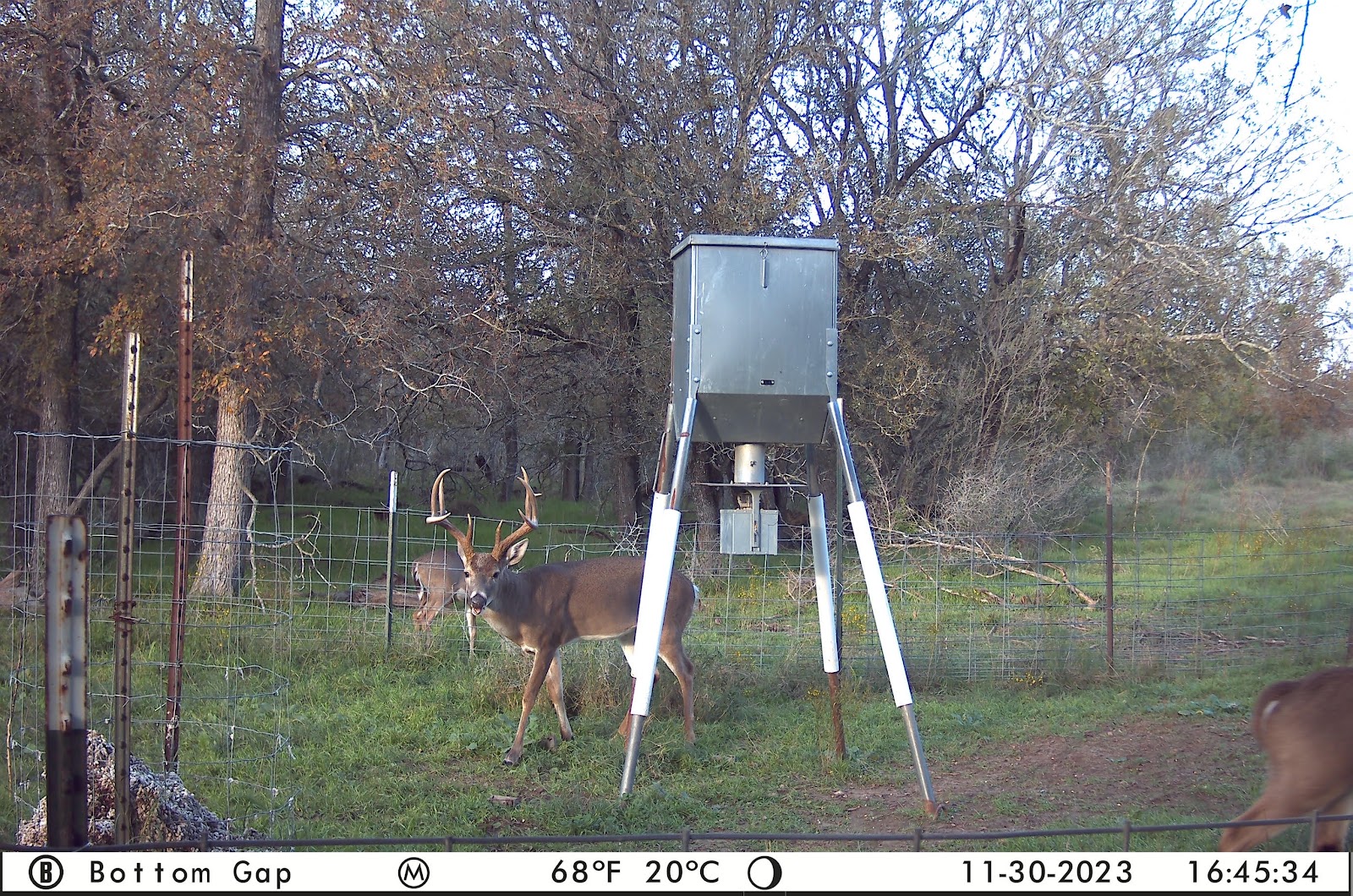
Hunting land for sale in Texas means rural acreage bought mainly for hunting and recreation, and deer season is the best time to see how a property really performs. When the blinds are full and the feeders are spinning, you learn things about a tract that a summer showing just can’t tell you.
At Legacy Broker Group we spend every fall walking ranches with buyers, from Kendall County out to the Big Bend country. This guide covers what this season looks like, what recreational property for sale in Texas costs right now, what to check before you write an offer, and why a good ranch broker earns their keep when you’re looking for a place of your own.
When is hunting season in Texas for 2026-27?
The 2026-27 general white-tailed deer season opened November 7, 2026. It runs through January 3, 2027 in the North Zone and January 17, 2027 in the South Zone. Archery season ran October 3 through November 6, 2026 in 252 of Texas’s 254 counties, according to the Texas Parks and Wildlife Department’s season calendar.
After the general season there’s more to come. The Special Late season runs January 4-17, 2027 in the North Zone and January 18-31, 2027 in the South Zone, and a muzzleloader-only season runs January 4-17, 2027 in 90 counties. Texas sets deer rules county by county, so bag limits, antler restrictions and doe days depend on where your property sits. That’s one more reason to know a county’s regulations before you buy there.
The herd is in good shape. After three straight years of above-average fawn survival, TPWD estimates the white-tailed deer population at 5.64 million, as reported by FOX 7 Austin. The same report advises hunters to watch for New World screwworm and to follow Chronic Wasting Disease rules. Both are worth asking a seller about when you tour a ranch.
How much does hunting land cost in Texas?
Statewide, Texas rural land averaged $5,218 per acre in the second quarter of 2026 (April through June). That’s according to the Texas Real Estate Research Center’s report, published in August 2026. Region matters far more than the statewide number, and the spread between regions is wide.
In that same quarter, the Austin-Waco-Hill Country region reached $8,040 per acre and South Texas was nearing $6,300. West Texas climbed to $3,008. Far West Texas came in at $1,139 per acre, though the Research Center cautions that a limited number of sales heavily skews that figure. In the first quarter of 2026, Far West Texas sat at $630 per acre, which shows how much that thin market can swing.
The Research Center described the statewide market as plateauing in the second quarter of 2026, after strong resilience through 2025. Keep in mind these are regional medians for large rural tracts. A hunting ranch with live water, a high fence, a lodge or a strong deer program can sell well above its region’s figure. A tract with tough access or no water can sell well below it. A broker who knows recent comparable sales in the specific county is the best way to judge whether an asking price makes sense.
What should I look for when buying a hunting ranch in Texas?
Look at habitat, water, access and the paperwork, in roughly that order. Then confirm how the land is appraised for property tax and whether it’s enrolled in any TPWD deer program. We go deeper on the on-the-ground checklist in our guide to what to look for in a hunting ranch property. Here’s the short version.
Habitat and neighbors. Brush cover, browse and travel corridors matter more than total acreage. So does what happens next door. A small tract surrounded by well-managed ranches often hunts bigger than its size, and the reverse is true too.
Water. In Texas, groundwater has traditionally followed the rule of capture, which lets a landowner pump the water beneath the property. But groundwater conservation districts, created under Texas Water Code Chapter 36, can regulate production through permitting and well spacing. The Texas Water Development Board notes that private wells generally need registering only if the property falls within a district. Ask which district covers the tract and what its rules are. If you’re looking out west, our post on water rights for Far West Texas ranch buyers is worth a read.
Tax valuation. Under Texas Tax Code Section 23.51(7), wildlife management can be a qualifying agricultural use. However, the land generally has to already be qualified open-space (1-d-1) land when the wildlife use begins. Comptroller rules list seven practices: habitat control, erosion control, predator control, supplemental water, supplemental food, shelters and census counts. Owners typically carry out at least three and file a management plan with the county appraisal district. Find out how the land is appraised today and what happens to that valuation when ownership changes, and confirm it with the appraisal district and your CPA. Our post on ag exemption tips for Texas ranches covers the basics.
Deer program enrollment. TPWD’s voluntary Managed Lands Deer Program offers a Harvest Option and a Conservation Option, and enrolled participants have to meet program requirements for the full year of enrollment. If a property is enrolled and nobody withdraws it by the deadline, harvest on that land must follow MLDP rules for that year. Ask the seller early.
Leasing income. If you plan to lease hunting rights to help carry the ranch, TPWD requires the landowner or the landowner’s agent to hold a hunting lease license before taking pay from hunters. Ask whether any existing lease runs past closing.
Where are the best Texas hunting ranches for sale by region?
Most buyers we work with focus on three of the seven Texas A&M land regions: South Texas, Austin-Waco-Hill Country and Far West Texas. Each one offers a different kind of hunting and a different price point.
South Texas has a reputation for mature, trophy-class bucks. FOX 7’s season preview named South Texas and the Rolling Plains as top areas for them. The South Zone also gets the longest general season. Browse South Texas hunting ranches for sale to see what’s on the market now.
The Austin-Waco-Hill Country region is where our Boerne and Horseshoe Bay – Highland Lakes offices work every day. It’s the priciest of the three per acre, but many buyers can reach their place within a short drive of San Antonio or Austin. Take a look at Austin-Waco-Hill Country hunting land for sale, or narrow your search to a single county. There’s Bandera County TX hunting land for sale on our Bandera County land and ranches page. Farther northwest on the Edwards Plateau, buyers searching for Menard County TX hunting land for sale can start with our Menard County land and ranch listings.
Far West Texas offers big country, desert mountains and the lowest per-acre prices of the three, and our Alpine office covers it. Browse Far West Texas hunting ranches for sale in Brewster, Presidio, Terrell and Jeff Davis counties. Out there, water, access roads and distance to services matter even more than usual.
Do I need a real estate agent to buy hunting land in Texas?
No law requires you to use an agent to buy land in Texas, but an experienced ranch broker can protect you from expensive mistakes. Buying rural land is different from buying a house. Boundaries, easements, water, minerals, tax valuation, wildlife programs and leases all affect what you’re really getting.
The rules around representation have also changed. Since January 1, 2026, under Senate Bill 1968, Texas Occupations Code Section 1101.563 requires a license holder to sign a written agreement with a prospective buyer of residential property before showing it, or before presenting an offer if nothing is shown, as TREC explains. The law also removed subagency. Whether a particular rural tract counts as residential is a question for your agent and attorney. Either way, a written agreement makes it clear who works for you and that compensation is negotiable.
A Texas ranch broker for recreational land does more than unlock gates. A good one knows which ranches are coming to market before they’re advertised, pulls recent comparable sales, reads surveys and title commitments, and spots access or easement problems. They also bring in the right specialists, such as a surveyor, a wildlife biologist, a water well contractor or a real estate attorney. Our Land and Ranch division is built around exactly that kind of work.
What is the best time of year to buy hunting land in Texas?
The best time to look at hunting land is during and right after the season, from roughly October through January. That’s when you can see deer movement, sign, hunting pressure on neighboring places and how the roads hold up. Spring and summer are better for judging water, forage and how the land handles heat.
The smartest buyers see a property in more than one season if they can. Spend a fall morning in a blind and ask to come back in late summer to check stock tanks and wells. The timing also affects the paperwork: MLDP enrollment, hunting lease terms and the tax year all line up with the calendar. Closing in winter gives you the spring and summer to build roads, plant food plots and set up a management plan before next fall.
If you own a ranch and are thinking about selling into this season’s demand, a Land and Ranch broker price opinion is a no-pressure way to learn what it might bring.
How do I buy hunting land in Texas, step by step?
Start by setting your goals and budget. Then pick a region, tour properties with a ranch broker, make an offer with the right contingencies, and finish your due diligence before closing. Here’s the process we walk buyers through:
1. Decide what you’re hunting, how far you’re willing to drive and how much land you need, then talk with an agricultural lender about financing. 2. Choose a land region and the counties within it. 3. Tour properties, ideally during the season, and ask about water, access, neighbors, leases and deer program enrollment. 4. Make an offer with a feasibility or option period long enough for a survey, title review and a water check. 5. Confirm the tax valuation with the appraisal district, and review mineral and easement questions with your attorney. 6. Close, then put your wildlife management and lease plans in place before next season.
When you’re ready to start looking, reach out to our Land and Ranch team. We’ll ask a lot of questions about how you hunt and what you want the place to be, and then we’ll go find it.
Frequently Asked Questions
Texas rural land averaged $5,218 per acre in the second quarter of 2026, according to the Texas Real Estate Research Center. Prices ranged from about $1,139 in Far West Texas to $8,040 in the Austin-Waco-Hill Country region. Individual ranches can sell well above or below those figures depending on water, improvements and access.
No law requires one, but a ranch broker helps you sort out easements, water, tax valuation, leases and pricing on rural land. Since January 1, 2026, Texas requires a written buyer agreement before an agent shows residential property, so ask your agent how that applies to the tract you’re considering.
October through January lets you see deer activity and neighboring hunting pressure firsthand. If you can, visit again in summer to check water and forage before you commit.
Bandera County is in the Austin-Waco-Hill Country region, and our Bandera County land and ranches page lists what’s available now. Our Boerne office works the county and can walk you through it.
Inventory changes often, so check our Menard County land and ranch listings for current properties. Menard County sits on the western edge of the Austin-Waco-Hill Country region and generally offers more acreage for the money than the counties closer to San Antonio and Austin.
Under Texas Tax Code Section 23.51(7), wildlife management can be a qualifying agricultural use if the land was already qualified open-space land when the wildlife use began. Owners carry out required practices and file a plan with the appraisal district. Confirm the details with the county appraisal district and your CPA.
Yes. TPWD requires the landowner or the landowner’s agent to hold a hunting lease license before accepting pay or other consideration for hunting rights.
Sources
- 2026-2027 Hunting Season Dates, Texas Parks and Wildlife Department
- Texas deer season 2026-27: Herd reaches 5.64 million (FOX 7 Austin)
- Fish and Game Guide, Texas Deer Season 2026-27
- Texas Rural Land Markets, Second Quarter 2026, Texas Real Estate Research Center
- Texas Rural Land Markets, First Quarter 2026, Texas Real Estate Research Center
- Texas Tax Code Section 23.51, Definitions (Justia)
- 34 Tex. Admin. Code Section 9.2001 (Cornell LII)
- Texas Wildlife Exemption: 3 of 7 Rule (TX Roots Global RE)
- Comptroller Guidelines for Qualification of Agricultural Land in Wildlife Management Use (Colorado CAD copy)
- MLDP, Managed Lands Deer Program, TPWD
- Hunting Licenses, TPWD Outdoor Annual
- Landowners Leasing Property for Hunting Required to Obtain License (Texas A&M AgriLife Texas Agriculture Law)
- General Groundwater and Private Water Well FAQ, Texas Water Development Board
- Management of Groundwater, Texas Groundwater Protection Committee
- What changes in 2026 about buyer/tenant representation in Texas, TREC